Calendars
The Maya kept several counts of days side by side. Three of them carry most of their dates, the 260-day count, the 365-day year, and the Long Count.
The 260-day count
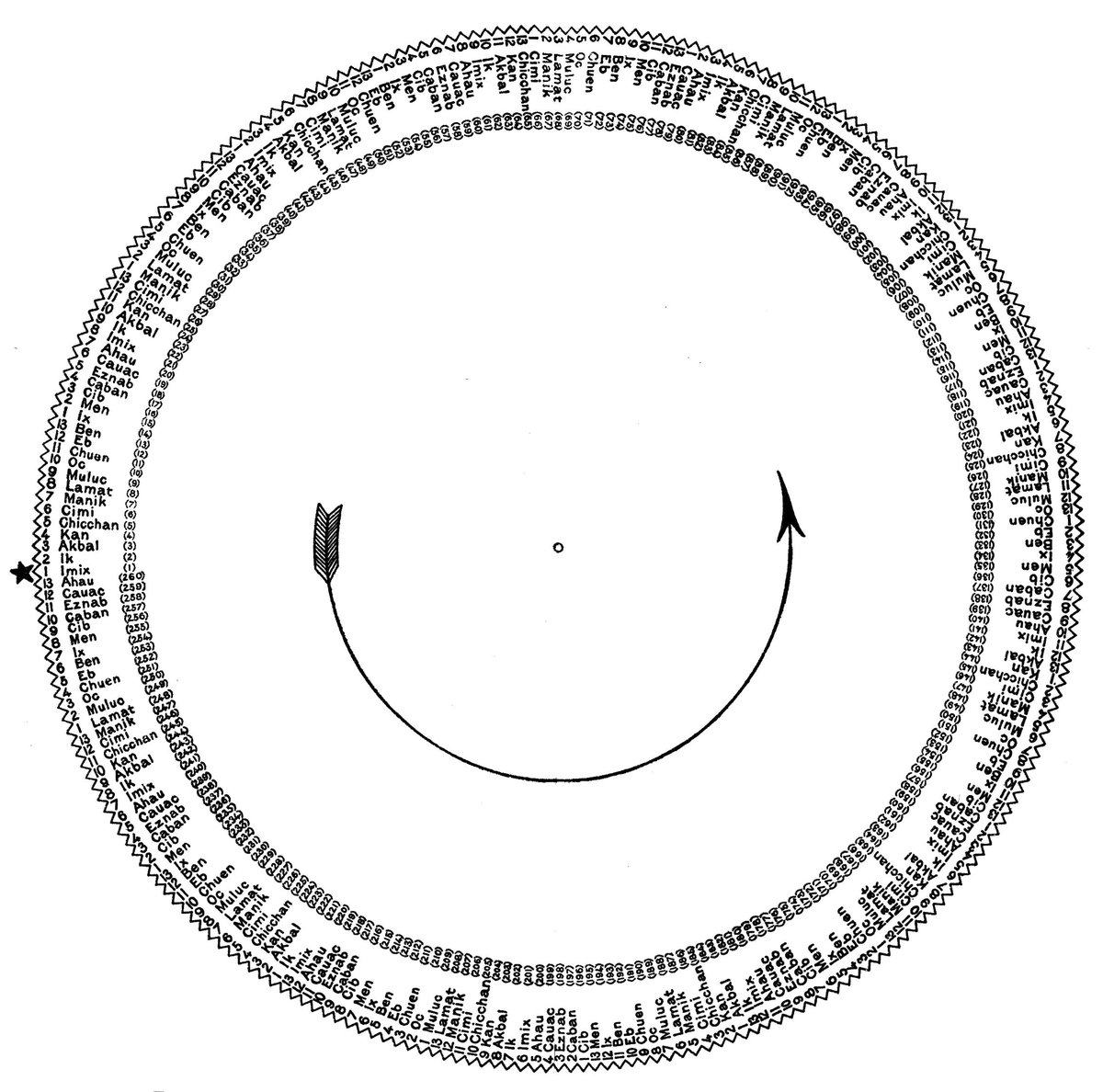
The 260-day count joins the numbers 1 to 13 to twenty day names. Each new day takes the next number and the next name, so 1 Kan is followed by 2 Chicchan, and 3 Cimi after it. After 13 the numbers begin again at 1, and after the twentieth name the names begin again. The same pair of number and name comes back after 260 days (Morley, 1915, pp. 41 to 43). Morley found more than 200 of these counts in the Madrid Codex alone (p. 43). He used the Aztec word tonalamatl for this count. Scholars now call it the tzolk’in (Kettunen and Helmke, 2025, p. 57).
The 365-day year
The year, the haab, had 18 months of 20 days and a last span of 5 days, which makes 365. Morley gives the sum as 18 × 20 + 5 (Morley, 1915, p. 45). The Maya added no leap day, so their year drifted against the seasons (pp. 44 to 45).
The Calendar Round
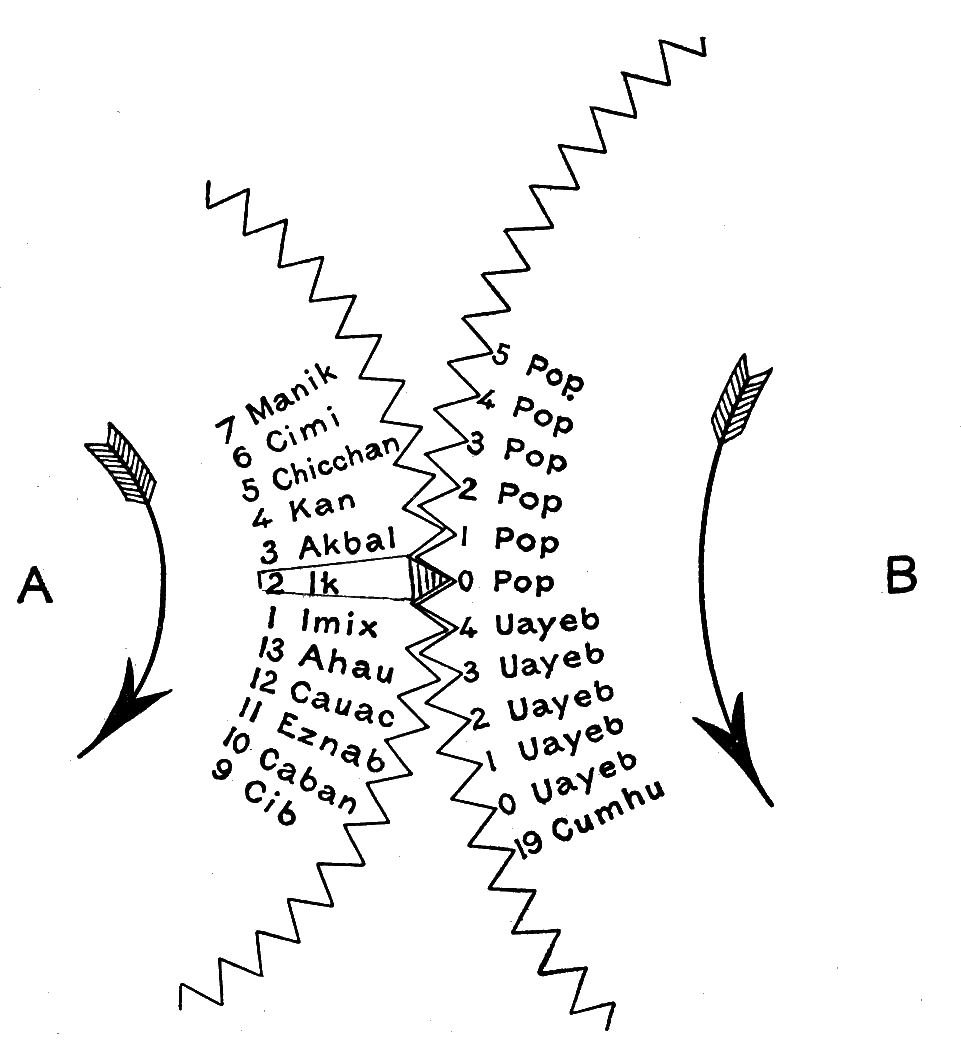
A day carries a name in both counts at once, as in 2 Ik 0 Pop. That pair of names does not come back for 18,980 days. That is 52 years of 365 days, or 73 rounds of the 260-day count. Scholars call the span the Calendar Round. The Maya name for it is not known (Morley, 1915, p. 58).
Numbers
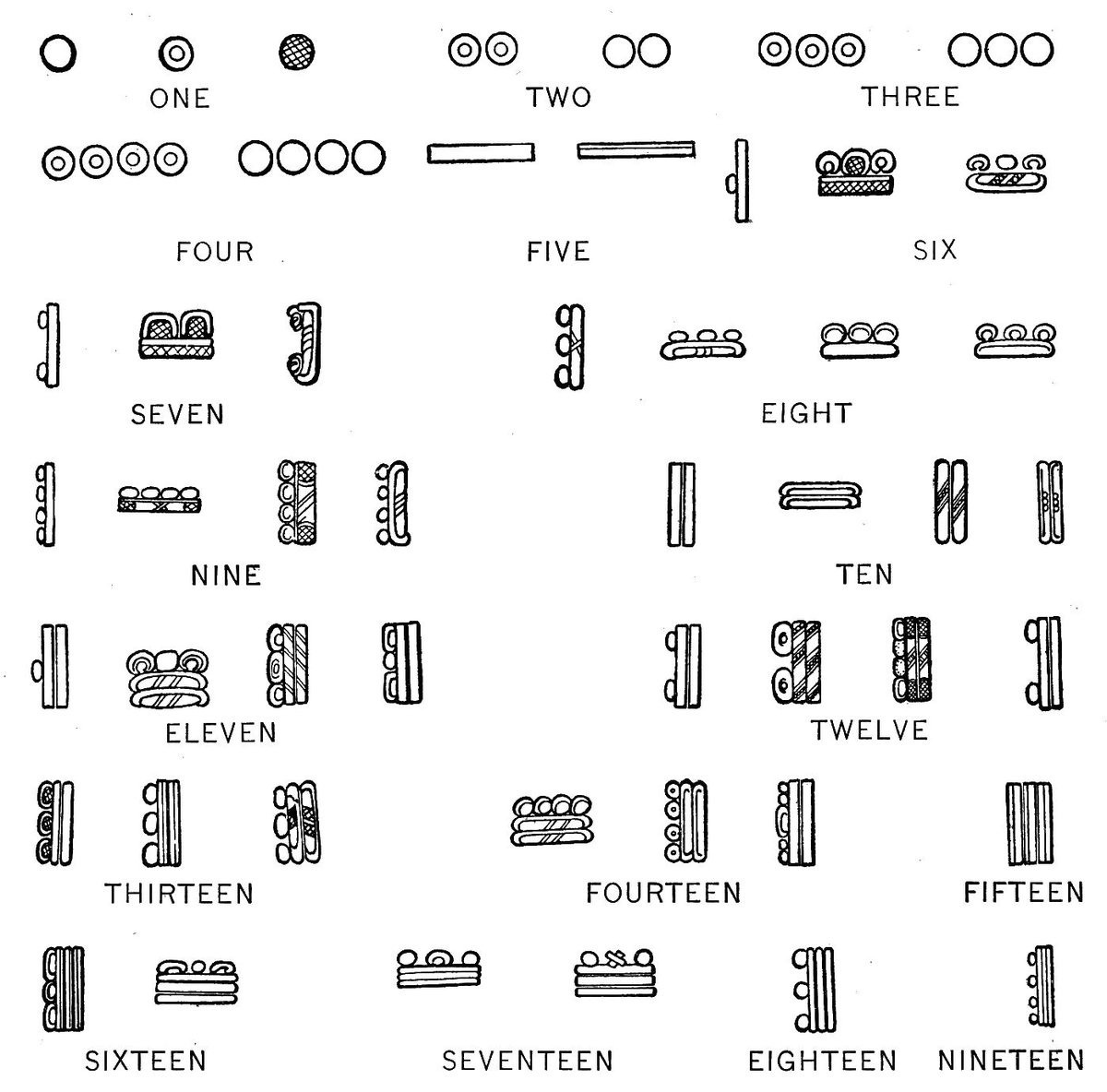
Maya numbers use a dot for one and a bar for five. With these two signs alone a scribe could write every number from 1 to 19 (Morley, 1915, pp. 87 to 88). Morley shows signs for zero in figures 48 and 53.
The Long Count
The Long Count numbers the days from a fixed starting point. It is written in five places, the b’ak’tun of 144,000 days, the k’atun of 7,200 days, the tun of 360 days, the winal of 20 days, and the k’in of one day (Kennett et al., 2013, p. 2). Each place counts to 20 before it fills, with one exception. Eighteen winals make a tun, which keeps the tun close to the length of the year (Morley, 1915, pp. 62 to 63). Morley used the older names cycle, katun, tun, uinal, and kin. In the Classic inscriptions the b’ak’tun was the pik and the tun was the haab (Kettunen and Helmke, 2025, p. 63).
The count runs from the day 4 Ahau 8 Cumhu (Morley, 1915, p. 61). Under the GMT correlation, the standard way of turning Maya dates into ours, that day falls on August 11, 3114 BC (Kennett et al., 2013, p. 2). Radiocarbon dates from a carved wooden lintel at Tikal support the GMT correlation (Kennett et al., 2013, p. 1). Kettunen and Helmke give August 13, 3114 BC, from a form of the same correlation that differs by two days (Kettunen and Helmke, 2025, p. 57).
Reading a Long Count date
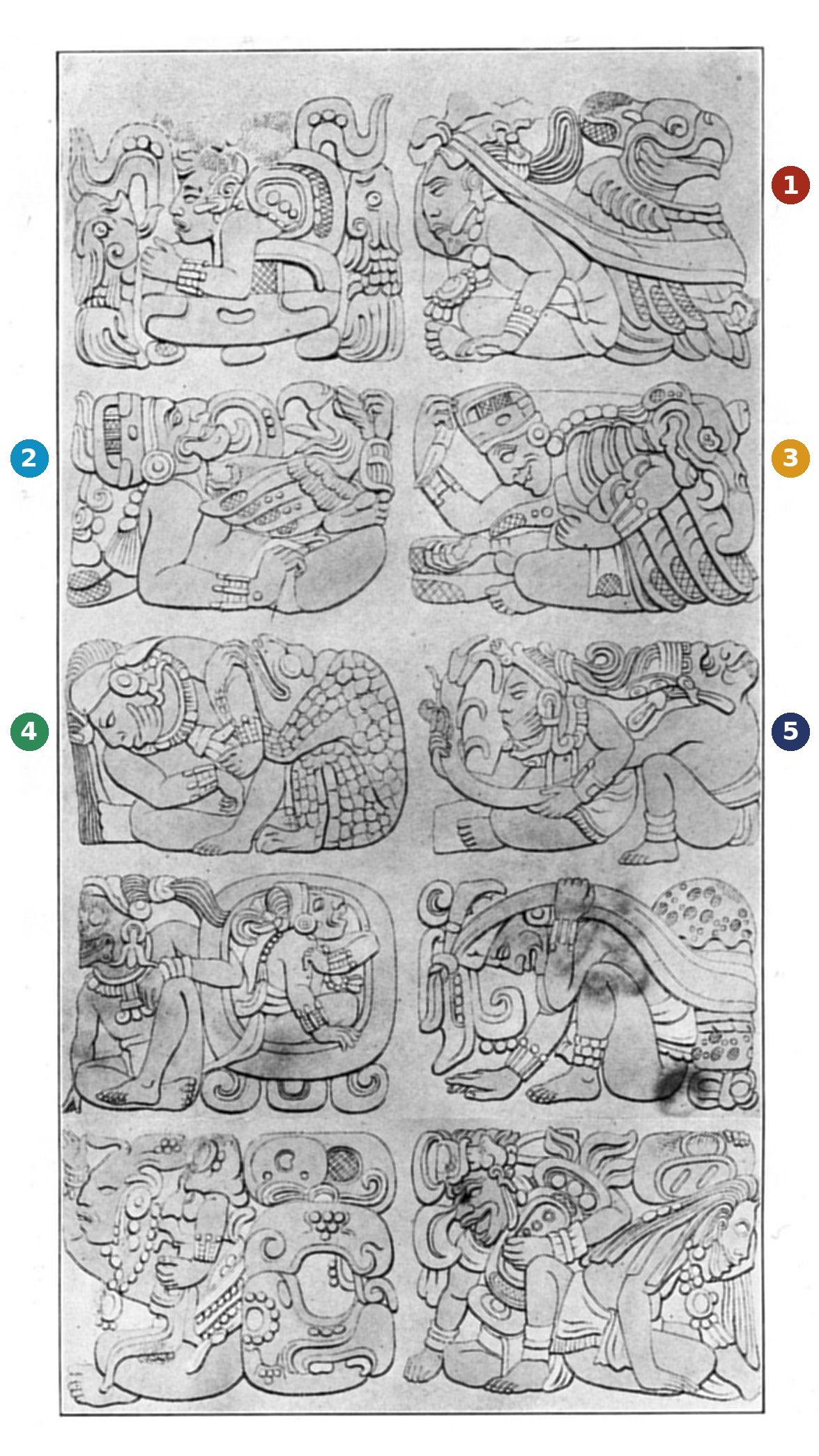
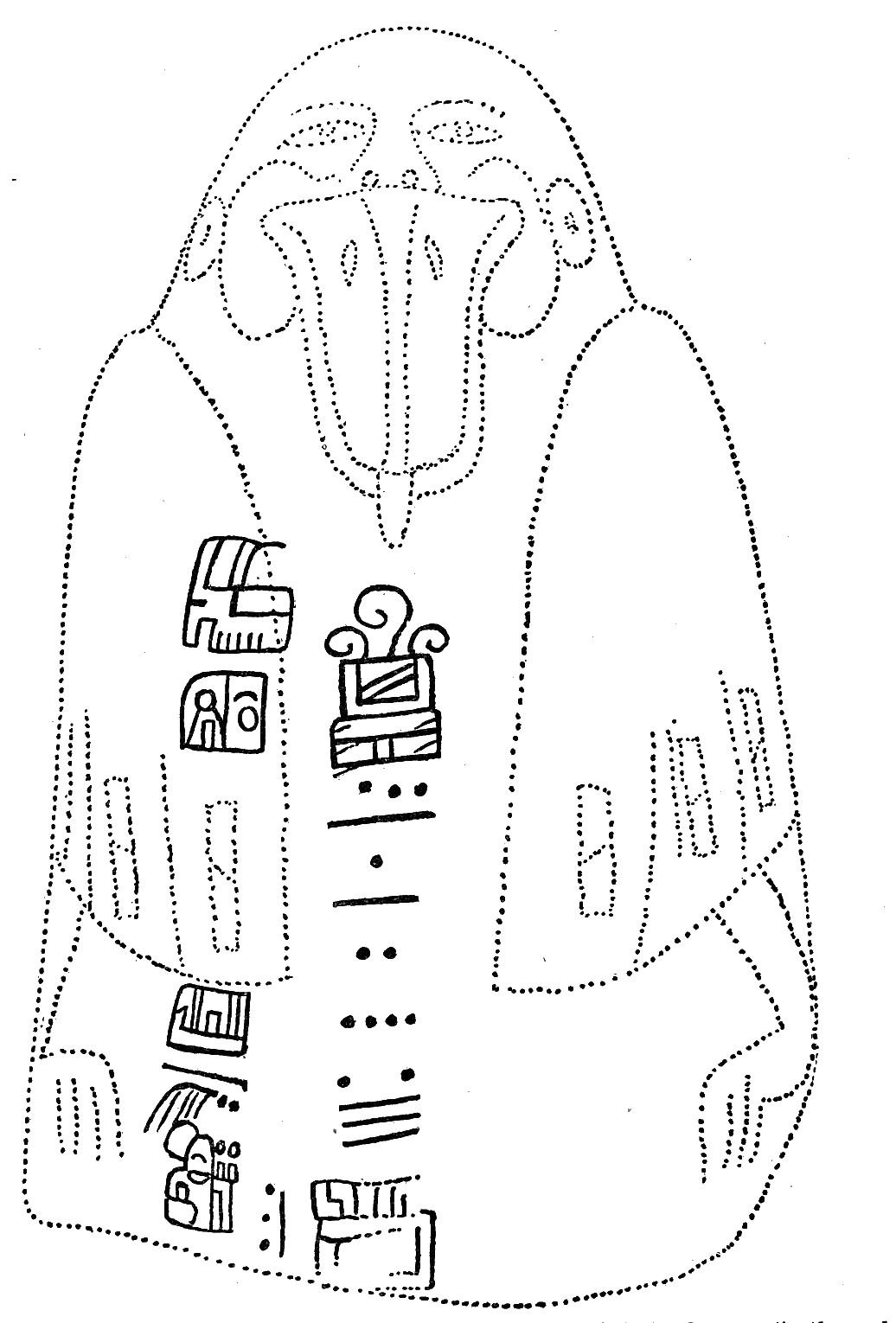
A date on a monument is read from the top. On Stela D at Copán, the first place reads 9 b’ak’tuns, or 1,296,000 days. The second reads 15 k’atuns, or 108,000 days, and the third reads 5 tuns, or 1,800 days. The last two places read zero. Added together, the date falls 1,405,800 days after the start of the count (Morley, 1915, pp. 189 to 190).
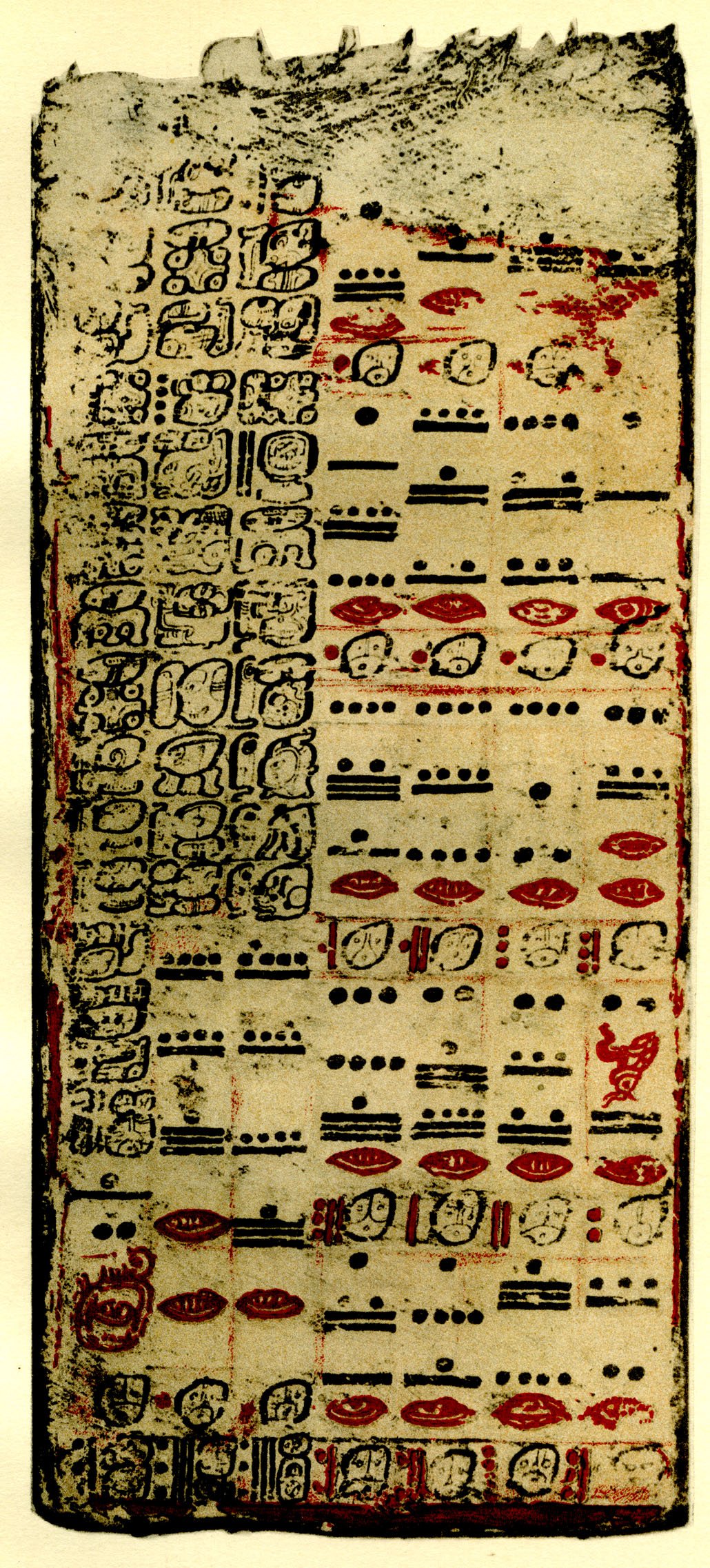
In the books, scribes wrote Long Count numbers in a column. On page 24 of the Dresden Codex the unit signs are left out, and the place of each number tells its unit (Morley, 1915, p. 267).
The Maya were not the first in Mesoamerica to write Long Count dates (Kennett et al., 2013, p. 2). Some early dates come from outside the Maya area (to verify).
Writing and time Words Maya languages
Sources
- Kennett, D. J., Hajdas, I., Culleton, B. J., Belmecheri, S., Martin, S., Neff, H., Awe, J., Graham, H. V., Freeman, K. H., Newsom, L., Lentz, D. L., Anselmetti, F. S., Robinson, M., Marwan, N., Southon, J., Hodell, D. A., & Haug, G. H. (2013). Correlating the ancient Maya and modern European calendars with high-precision AMS 14C dating. Scientific Reports, 3, Article 1597. https://doi.org/10.1038/srep01597
- Kettunen, H., & Helmke, C. (2025). Introduction to Maya hieroglyphs (20th ed.). Wayeb. https://www.wayeb.org/wp-content/uploads/2025/11/Kettunen_Helmke_2025_WH_English_20th_ed.pdf
- Morley, S. G. (1915). An introduction to the study of the Maya hieroglyphs (Bulletin 57). Bureau of American Ethnology, Smithsonian Institution. Project Gutenberg edition, 2013. https://www.gutenberg.org/ebooks/43491
The images on this page come from Morley (1915). They are in the public domain in the United States. The numbered dots on Stela D were added for Sakbe.